

Kingfisher
(Alcedo Atthis)


Scientific Classification
Common Name: Kingfisher
Kingdom: Animalia
Phylum: Chordata
Class: Aves
Order: Coraciiformes
Suborder: Alcedines
Family: Alcedinidae
Species: About 118 living species
Description
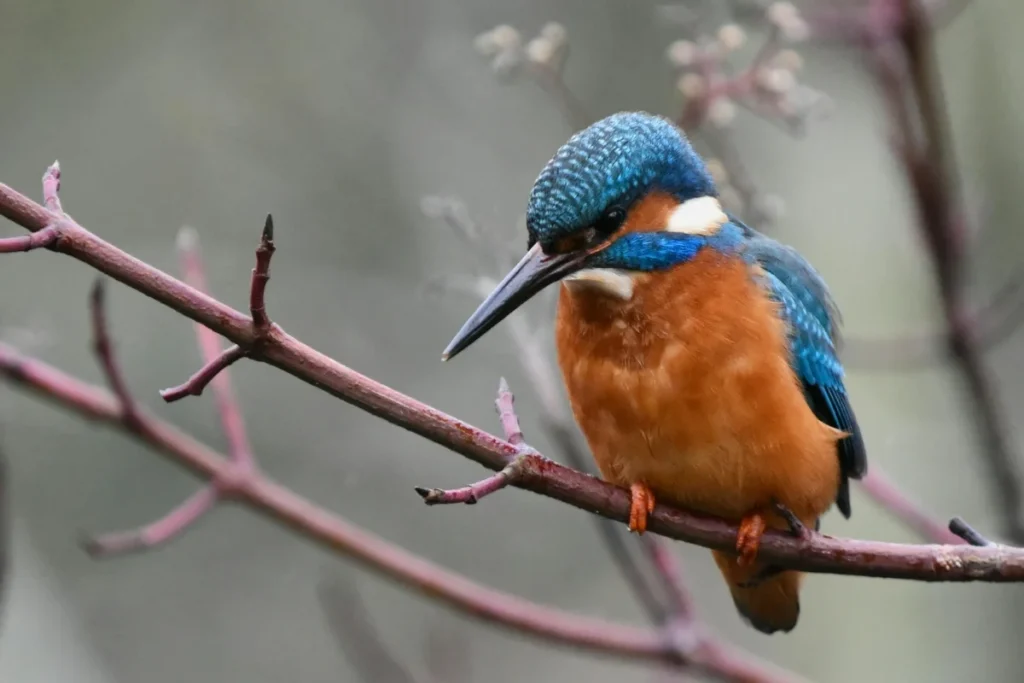
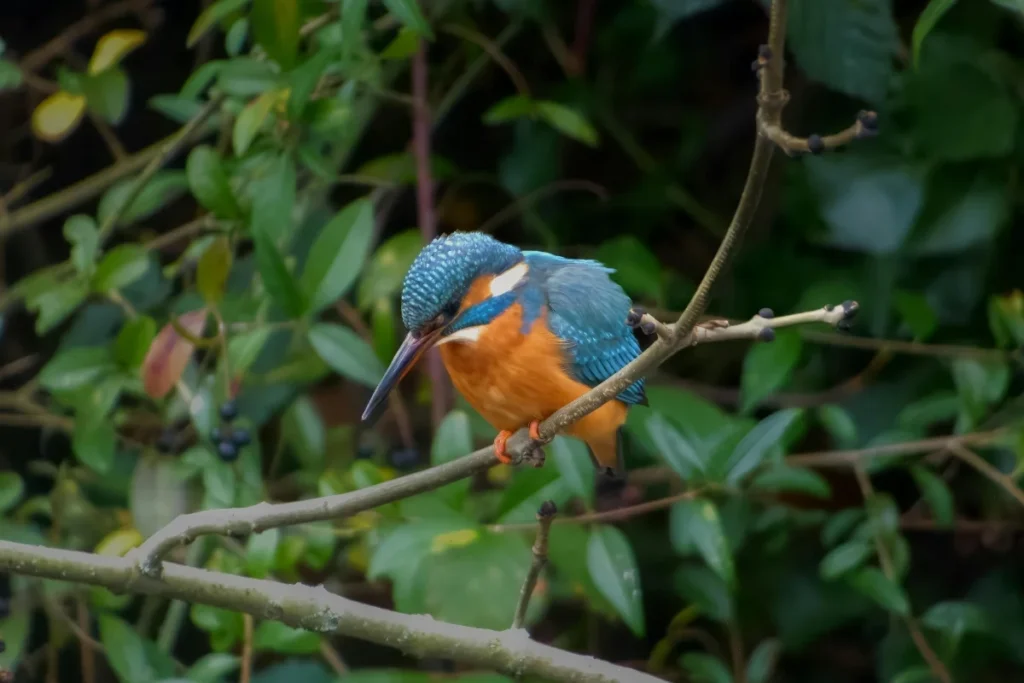
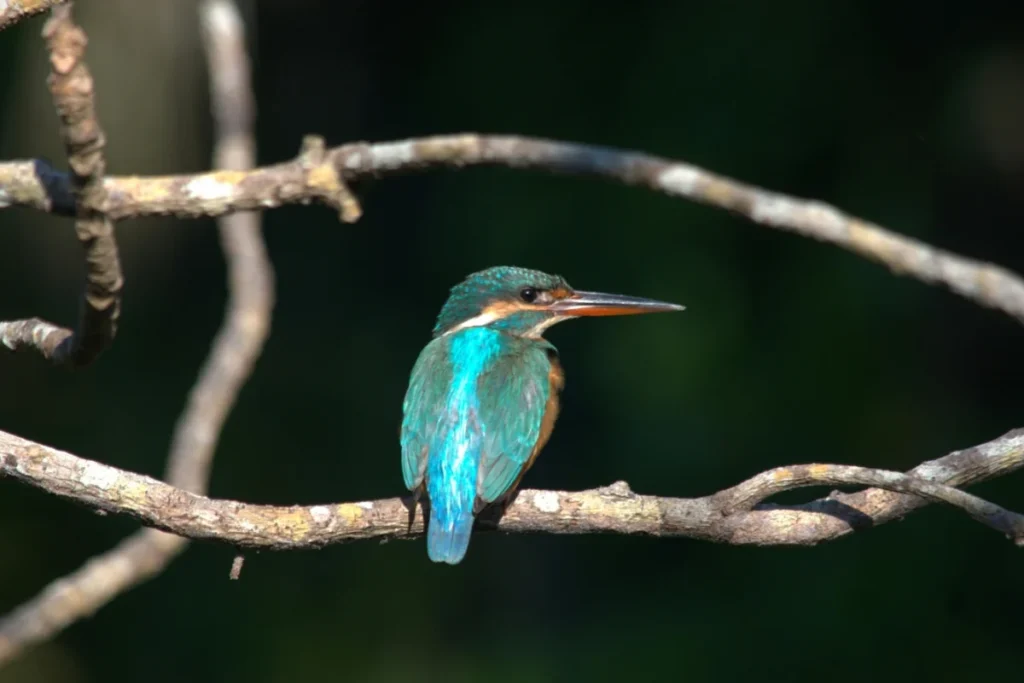
Kingfishers are small to medium-sized, brightly colored birds known for their large heads, sharp pointed bills, short legs, and stubby tails. They belong to the family Alcedinidae and are found across tropical and temperate regions of the world. Although commonly associated with rivers and fish, many kingfisher species live in forests and do not eat fish at all. Their vivid blue and green colors are produced by feather structure rather than pigments, creating a striking appearance.
Size
Kingfishers vary greatly in size depending on species. The smallest species, the African dwarf kingfisher, measures about 10 cm (3.9 inches) in length, while the largest, such as the giant kingfisher, can reach 42–46 cm (17–18 inches).
Weight
Their weight ranges from as little as 9–12 grams in the smallest species to nearly 500 grams in the heaviest species, such as the laughing kookaburra.
Sex Differences
In most kingfisher species, males and females look very similar, with little visible sexual dimorphism. When differences exist, they are usually subtle, such as slight variations in bill color or plumage shade.
Diet
Kingfishers feed on a wide variety of prey. While many species hunt fish by diving from a perch, others eat insects, spiders, worms, crustaceans, frogs, reptiles, small mammals, and even birds. Forest-dwelling kingfishers mainly consume insects, while water kingfishers are more specialized fish hunters. Larger prey is often beaten against a branch before being swallowed.
Breeding
Kingfishers are generally territorial and often monogamous. Most species nest in cavities, usually tunnels dug into riverbanks, lakesides, or earthen walls. Some forest species nest in arboreal termite mounds. Both males and females help dig the nest and incubate the eggs. Clutch size typically ranges from three to six white eggs, and chicks usually remain with their parents for several months.
Life Span
In the wild, kingfishers typically live between 6 and 15 years, depending on species and environmental conditions. In protected or captive environments, some individuals may live longer.
Range
Kingfishers have a cosmopolitan distribution and are found on every continent except Antarctica. They are most diverse in Africa, Asia, and Australasia, with fewer species in Europe and the Americas.
Habitat
Kingfishers occupy a wide range of habitats, including rivers, lakes, ponds, forests, woodlands, mangroves, grasslands, coral atolls, and even deserts. Many species have adapted well to human-altered environments such as agricultural land, parks, and urban gardens.
Conservation Status
IUCN: Most kingfisher species are classified as Least Concern, but several forest and island species are Near Threatened, Vulnerable, or Critically Endangered due to habitat loss, deforestation, and introduced predators.
Fun Facts
1. Not all kingfishers eat fish—many forest species survive entirely on insects and small land animals.
2. The bright blue color of kingfishers is not caused by pigment but by light scattering in their feather structure, known as the Tyndall effect.
3. Kingfishers have excellent eyesight and can accurately judge underwater depth while diving for prey.
4. The laughing kookaburra is the heaviest kingfisher and is famous for its loud call that sounds like human laughter.
5. Some kingfishers nest in termite mounds, especially forest-dwelling species.
6. In Greek mythology, kingfishers were believed to calm the sea during the nesting period, giving rise to the term “halcyon days.”
Ecology and Conservation
Kingfishers play an important role in ecosystems by controlling insect, fish, and small animal populations. They are indicators of healthy freshwater and forest environments. However, habitat destruction, especially deforestation and riverbank degradation, poses serious threats to many species.
Conservation efforts focus on protecting forests, wetlands, and nesting sites, particularly for island and forest-restricted species. Preserving kingfishers also helps protect broader ecosystems that support many other forms of wildlife.
Bibliography
Rafinesque, C. S. (1815). Scientific descriptions of bird families.
Gill, F., Rasmussen, P. C., & Donsker, D. (IOC World Bird List).
Fry, C. H., Fry, K., & Harris, A. (1992). Kingfishers, Bee-eaters and Rollers.
Wikipedia contributors. “Kingfisher.” Wikipedia, The Free Encyclopedia.