

Ferret
(Mustela furo)
Scientific Classification
Common Name: Ferret
Scientific Name: Mustela furo
Kingdom: Animalia
Phylum: Chordata
Class: Mammalia
Order: Carnivora
Family: Mustelidae
Description
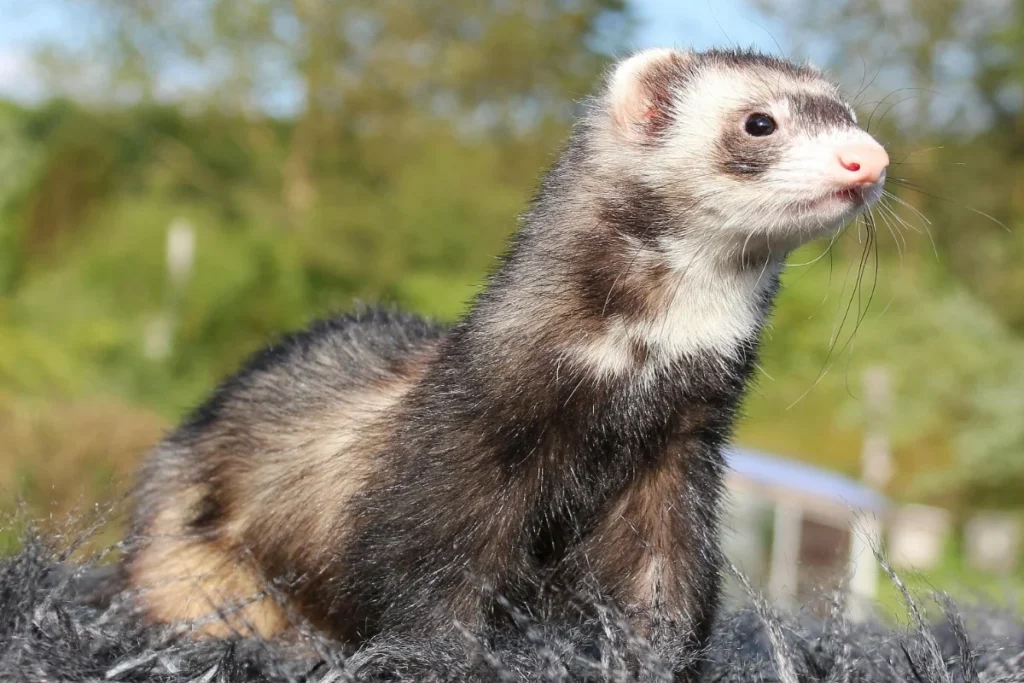
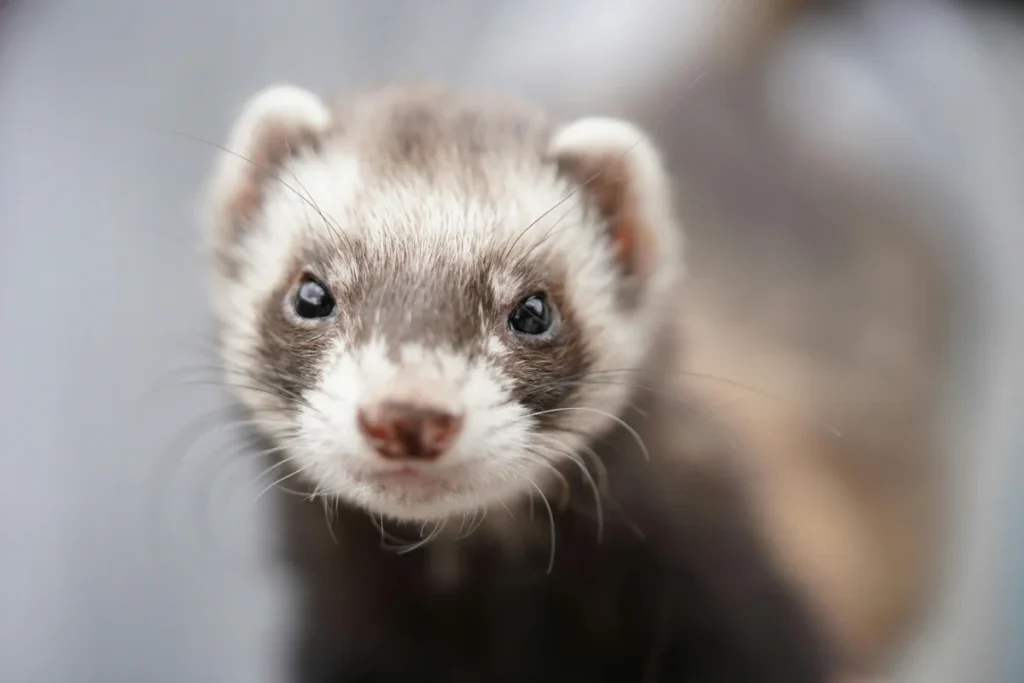
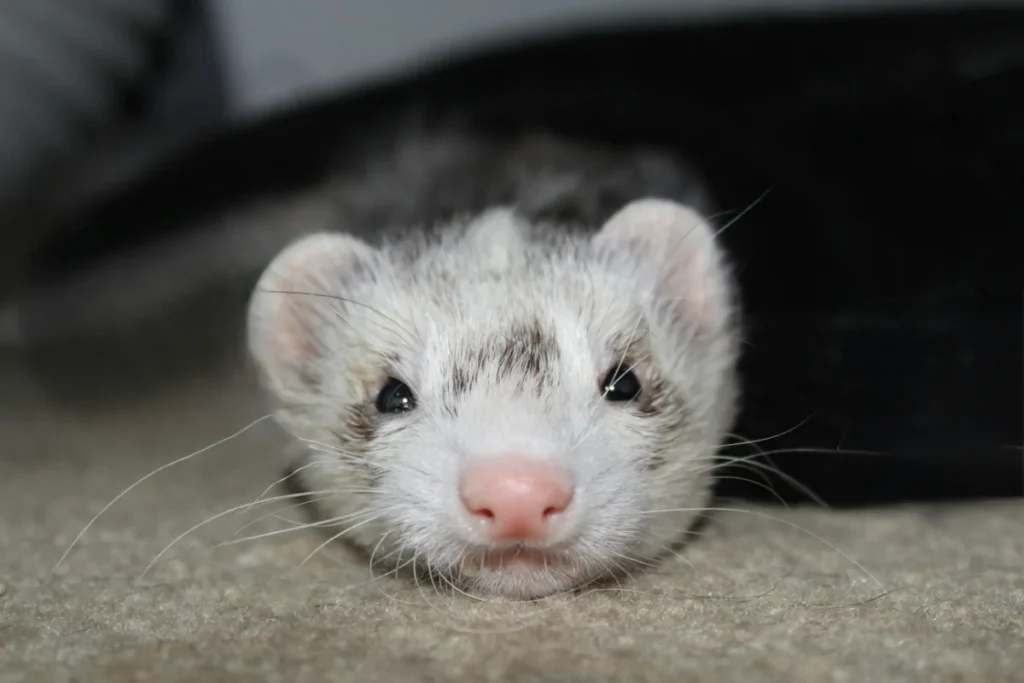
The ferret (Mustela furo) is a small domesticated mammal from the weasel family. It is believed to be descended from the European polecat. Ferrets have long, slender bodies, short legs, and soft fur that may be black, brown, white, or mixed. They are intelligent, playful, and curious animals that have been used for hunting, research, and as pets.
Size
Adult ferrets are about 45–50 cm (18–20 inches) long, including the tail.
Weight
They usually weigh between 0.7 and 2.0 kg (1.5–4.4 pounds). Males are larger than females.
Sleep
Ferrets sleep 14–18 hours a day and are most active during early morning and evening hours.
Diet
Ferrets are obligate carnivores and require a meat-based diet. They cannot properly digest plant foods and need to eat frequently due to a fast metabolism.
Breeding
Females have a gestation period of around 42 days and give birth to 3–7 kits. Kits become independent within three months.
Life Span
The average lifespan of a ferret is 7–10 years.
Range
Domestic ferrets are found worldwide through human ownership. Feral populations exist in limited areas.
Habitat
Ferrets live mainly in homes and human-controlled environments, preferring enclosed and sheltered spaces.
Conservation Status
Ferrets are classified as Domesticated and are not endangered. Some countries restrict ownership due to ecological concerns.
Ferret Facts
1. A male ferret is called a hob, a female is a jill, and babies are known as kits.
2. A group of ferrets is traditionally called a business.
3. Ferrets were historically used for hunting rabbits, a practice known as ferreting.
4. When excited, ferrets perform a playful behavior called the “weasel war dance.”
5. Ferrets communicate using scent, body language, and vocal sounds such as “dooking.”
6. Ferrets are widely used in medical research, especially for studying influenza and respiratory diseases.
Ecology and Conservation
Although domesticated, ferrets can impact ecosystems when they establish feral populations. In regions like New Zealand, ferret–polecat hybrids have caused serious declines in native bird species. As a result, strict regulations exist in several countries to control breeding, ownership, and importation. Responsible ownership and proper containment are essential to prevent ecological damage.
Bibliography
Linnaeus, C. (1758). Systema Naturae.
IUCN Red List of Threatened Species.
Wikipedia contributors. “Ferret.” Wikipedia, The Free Encyclopedia.