

House Sparrow
(Passer domesticus)
The house sparrow (Passer domesticus) is one of the most widespread and recognizable birds in the world. Closely associated with human settlements, this small bird is commonly seen around homes, markets, farms, and city streets. Its adaptability and social nature have allowed it to thrive alongside people for thousands of years.
Scientific Classification
The house sparrow belongs to the family Passeridae under the order Passeriformes. Its scientific name, Passer domesticus, reflects its strong connection with human habitation.
Physical Description
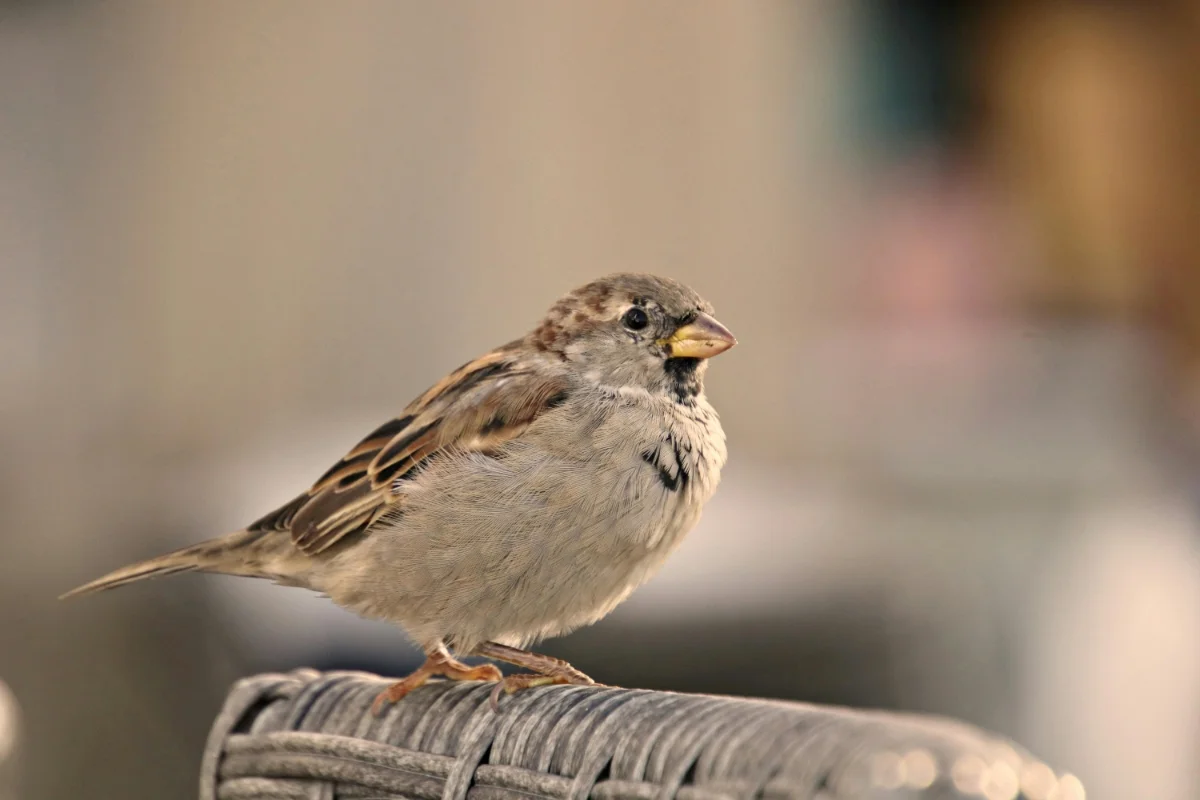
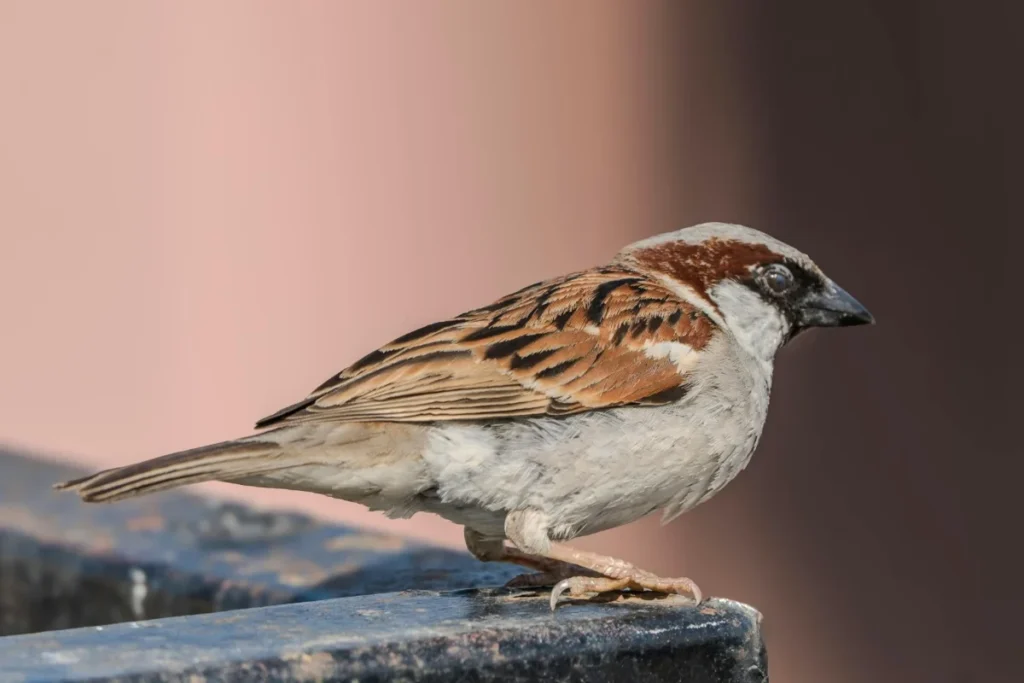
House sparrows are small, compact birds measuring about 5.5 to 7 inches in length and weighing 0.8 to 1.4 ounces. Males are more colorful, with a gray crown, chestnut-brown head sides, white cheeks, and a distinctive black throat patch known as a bib. Females are paler, mostly light brown and gray, without bold markings. Both sexes have short tails and strong, cone-shaped beaks designed for cracking seeds.
Habitat and Distribution
Where do Rabbits live?
Originally native to Europe, the Mediterranean region, and large parts of Asia, the house sparrow has been introduced to nearly every continent except Antarctica. Today, it is found across North and South America, Africa, Australia, and New Zealand. The species prefers areas close to humans and commonly nests in buildings, roof spaces, wall crevices, and street structures. Dense forests, extreme deserts, and polar regions are usually avoided.
Diet and Feeding Habits
The house sparrow is an opportunistic omnivore. Its diet mainly consists of grains, seeds, and weeds, especially those associated with agriculture and human food waste. Insects such as beetles, caterpillars, and flies are also eaten, particularly during the breeding season. Nestlings depend heavily on insects, which provide essential protein for growth and development.
Behavior and Social Life
House sparrows are highly social birds that live in flocks throughout the year. They often feed on the ground, roost together at night, and engage in communal chirping. Bathing in dust or water is common, and vocal communication plays an important role in maintaining group bonds. Despite their small size, house sparrows can be aggressive when competing for food or nesting sites.
Breeding and Nesting
Breeding usually begins in spring, though it can occur year-round in warmer climates. House sparrows form monogamous pairs and often reuse the same nesting sites. Nests are built from grass, feathers, paper, and other soft materials, typically hidden in man-made structures or tree cavities. A typical clutch contains three to five eggs, which hatch after about two weeks. Both parents participate in feeding and caring for the chicks.
Lifespan and Predators
In the wild, most house sparrows live three to five years, although some individuals have survived much longer. Common predators include domestic cats, hawks, owls, snakes, and other urban predators. Juvenile sparrows face the highest risk during their first year of life.
Conservation Status
Globally, the house sparrow is classified as Least Concern by the IUCN due to its large population and wide range. However, significant declines have been reported in parts of Europe, North America, and South Asia. Loss of nesting spaces, reduced insect populations, urban development, and pesticide use are considered major factors behind these declines.
Relationship With Humans
The house sparrow has shared a close relationship with humans for nearly 10,000 years. While it has sometimes been labeled a pest because of crop damage and competition with native birds, it also plays a helpful role by consuming insect pests. Its presence in daily life, literature, and culture makes it one of the most familiar birds in the world.
References
https://en.wikipedia.org/wiki/House_sparrow